
Lotus

The Lotus clock is a truly amazing project by independent watchmaker Anton Suhanov
The idea of a table clock in the shape of a metal flower and its realization is astonishing. The clock has a mechanical flower that looks like a bud on a long, thin stem. The petals of the bud open automatically during the day, revealing a glass sphere inside the bud in which a triple-axis tourbillon rotates, resembling a butterfly or a moth.
The traditional architecture of the movement is not only reworked and recreated here, but turned on its head, even if it seems impossible. The base of the movement is concealed in a round, flat stand on which the world time is displayed and from the center of which a long, thin rod protrudes, crowning a bud with silver-colored metal petals.
Like a living flower, the petals of a mechanical flower open during the day and close at night, depending on the time of the local time zone, which is indicated by a mark on the central disc. Therefore, the mechanical flower represents a day/night function for the local time zone. Inside the bud is a glass sphere in which a triple-axis tourbillon floats as if by magic, and there is also a seconds display.


Anton Suhanov’s most important task was to animate the flower with mechanical means and characteristic kinematics, and not through the external similarity of the clock shape and the flower, which is deliberately restrained and almost schematic. The petals close and open slowly and evenly, as if it were a real flower, subject to the day-night change of the sun on earth and symbolizing the continuity of the eternal cycle of life.
The complex rotation of the three carriages of the triple-axis tourbillon and, above all, the oscillations of the balance wheel in space embody the fluttering of a butterfly or a moth sitting on a flower. The use of the patented Flaming Balance technology allows the balance wheel to glow in the dark, which, in combination with the complex spatial movement of the three tourbillon carriages, creates astonishing luminous patterns. Thanks to the combination of these movements: lightning-fast-unpredictable and long-tough-unpredictable, it is possible to demonstrate the beauty of the diversity of life forms.
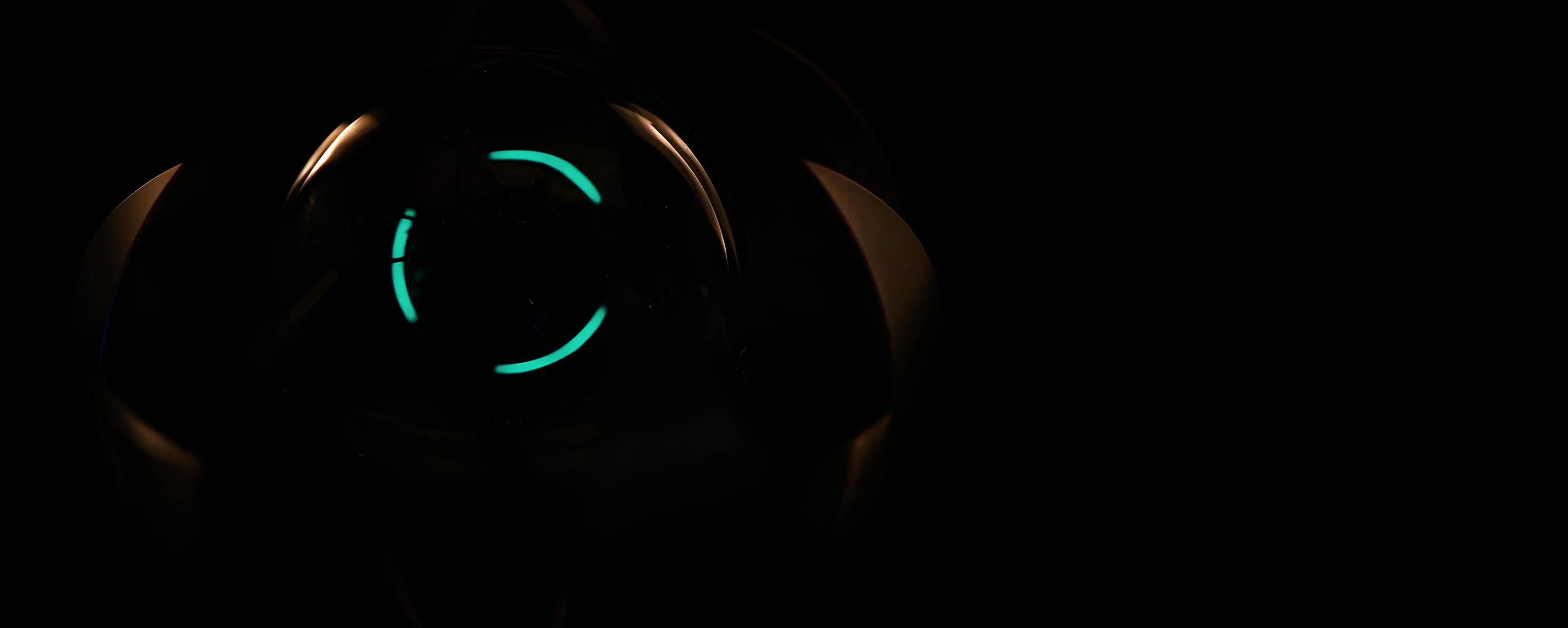
The Flaming Balance technology patented by Anton Suhanov is used in the Lotus clock
The idea dates back to 2018 and was first used by the master craftsman in his Pharos clock. This technology involves inserting luminous parts into the balance wheel. These inserts are made of a special material that consists largely of a luminous substance.
When the balance wheel oscillates, the luminous trace of the inserts merges into a circle of light, thus increasing the overall brightness.
In this way, the complex rotation of the three tourbillon carriages, in the center of which the balance wheel oscillates, can create a variety of light patterns.
Titanium carriages
All three tourbillon carriages are made of titanium, which makes the structure incredibly light and strong. This is necessary for the stable operation of the escapement, which is particularly important when the carriages rotate at high speed: The first (inner) carriage rotates and makes one revolution in 18 seconds, the second in 21 seconds and the third in 60 seconds.


Titanium not easy to work with, but it has good corrosion resistance and looks great after finishing. Also, this material allows you to get a stable bright colored coating by anodizing, which was done on the first carriage, making it stand out in front of the rest, symbolically resembling an exotic butterfly.
Unique escapement
An escapement consisting of the escapement wheel and the pallet fork was specially developed for the Lotus clock.


The development and manufacture of escapements is one of the fundamental skills of watchmaking. This skill requires not only good theoretical knowledge and high precision in the manufacture of parts, but also a high degree of skill on the part of the watchmaker. The escapement, together with the balance assembly, is responsible for the smooth flow of energy from the winding barrel to the balance wheel so that the clock can measure time accurately. Only a watch company that has developed its own escapement can call itself a watch manufacture.
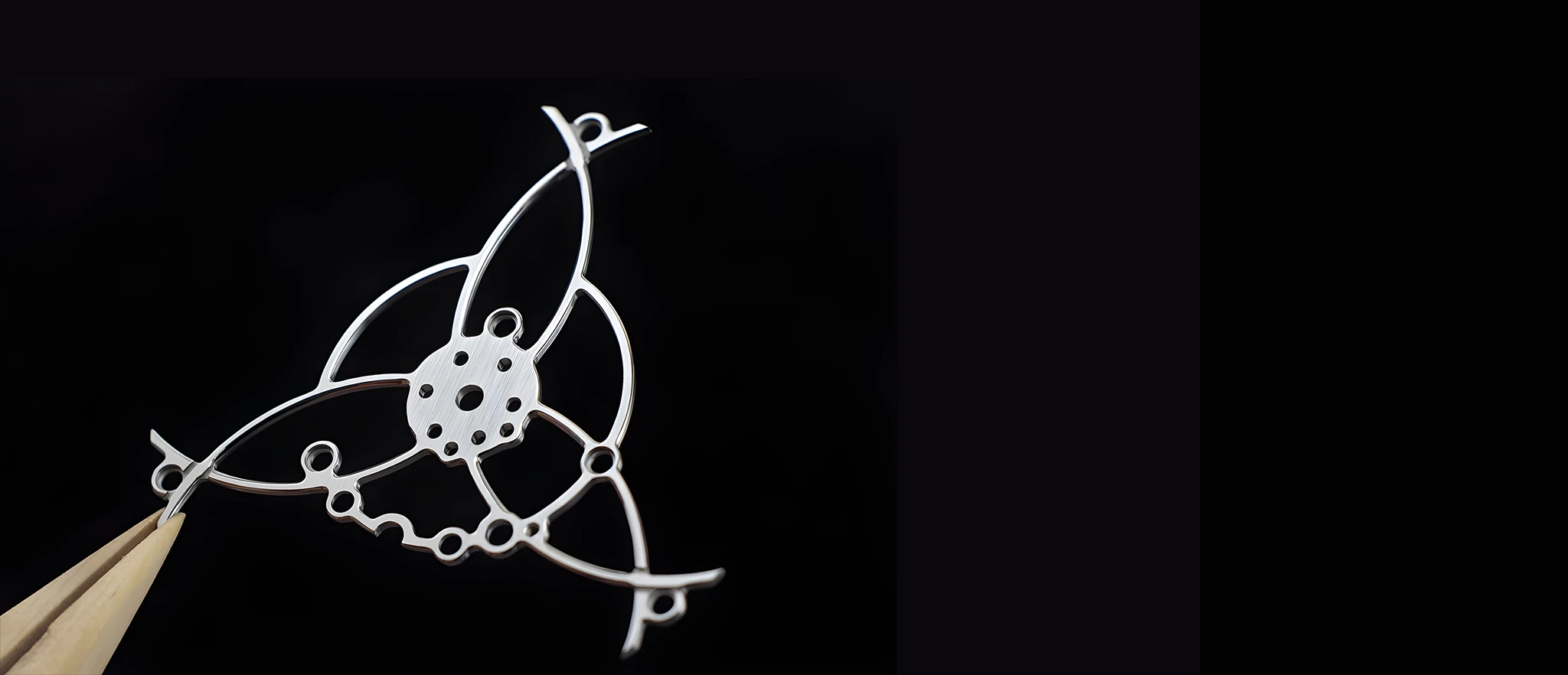
Maximum attention to the finishing of parts
All parts of the Lotus clock are finished according to classic Swiss finishing standards. At the same time, we do not limit ourselves to old methods, but are constantly developing new finishing methods and new combinations of techniques that allow us to further emphasize the unique character and originality of Lotus clock design.
We draw on centuries-old watchmaking traditions and are constantly looking for new ideas in the field of finishing. This approach allows watchmaking to evolve endlessly and reach new heights in the pursuit of perfection.
Designing the Lotus clock as a lotus flower
In Eastern tradition, the lotus is a symbol of purity. Everyone knows that the lotus is not a houseplant, and after it has been picked, it is unlikely to retain its beauty for more than a few days. Anton Suhanov designed the Lotus clock as a symbol of mechanical purity.
The main components are made of titanium, a light, strong and durable material used in the aerospace industry. Moreover, the shape created by the master is a generalized, symbolic image of the lotus flower.


The lotus flower was and is considered a sacred symbol in many great civilizations — from Egypt to Japan. Since ancient times, this flower has been revered and worshipped as a divine symbol. The lotus flower symbolizes purity, peace, fertility, longevity, health, honor and luck.
There are many stories about the miraculous victories of the lotus flower over time. In 1881, during the excavation of the tomb of Pharaoh Ramses II and Princess Nsi-Khonsu, several dried blue lotus buds were found that retained their color even after three thousand years. in 1933, scientists at Kew Botanic Gardens near London succeeded in germinating lotus seeds that were 1040 years old! American scientists from the College of California in Los Angeles succeeded in growing a healthy young plant from a 1228-year-old lotus seed that was kept in a museum. In Japan, viable lotus seeds were found in an old peat bog whose age, according to radiocarbon analysis, is around two thousand years. Such stories are astonishing, because the life force of the lotus not only exceeds the duration of human life, but also the existence of states and peoples.
Admiration for the incredible beauty of the lotus and its ability to sustain life even after thousands of years inspired Anton Suhanov to create the Lotus clock, with which he attempted to embody this incredible image of a lotus.
Specifications
- Indication
-
HoursMinutesSecondsDay / nigthWorld time
- Dimensions
-
Dimensions290 mm(height) x 180 mm(diam.)Total number of parts (movement + case)526Weightapprox 4.5 kg
- Case / Dial
-
Materialsstainless steel, aluminum, titanium, brassFinishing techniquespolishing, satin, sandblastingCase Parts175
- Movement
-
Triaxial tourbillon1st (inner) cage's cycle18 sec2 nd (middle) cage's cycle21 sec3 rd (outer) cage's cycle60 secBalance Frequency2.5 Hz (18,000 pc / h)Power reserve12 daysMovement Details351Jewels35Ball bearings21World time settingrotation of the ring with the citiesThe key holes for winding and setting the time are located on the bottom of the watch, so a special stand is used for this to access the bottom
High-resolution photos of Lotus, videos and press releases are in the media center.
Media center